The Rise of Interactive CYOA: How Digital Storytelling Is Redefining Choice-Driven Narratives
The first time a reader chose their own path through a story, it wasn’t in a video game or a smartphone app—it was in a 1976 paperback with a simple question: "You’re in a haunted house. Do you go upstairs or open the cellar door?" That moment birthed interactive CYOA, a genre that would later evolve into a digital revolution. Today, the concept has transcended its origins, merging with AI, VR, and dynamic databases to create hyper-personalized narratives where every decision reshapes the experience. What began as a niche experiment in print media has become a cornerstone of modern engagement—whether in education, marketing, or entertainment.
The appeal lies in its paradox: interactive CYOA systems offer both freedom and structure. Users crave agency, yet they also seek guidance, a tension that developers navigate by refining mechanics like branching paths, dynamic difficulty, and real-time feedback. The result? A medium that adapts to its audience, blurring the line between passive consumption and active participation. From Twine-based indie projects to corporate training modules, the technology has infiltrated industries where traditional storytelling falls short—where data meets desire, and algorithms anticipate choices before they’re made.
Yet for all its sophistication, the core remains unchanged: the thrill of turning the page—or clicking the button—and wondering, "What if I had chosen differently?" That curiosity is the engine of interactive CYOA, a format that thrives on uncertainty, replayability, and the illusion of infinite possibilities. But how did it get here? And where is it headed?
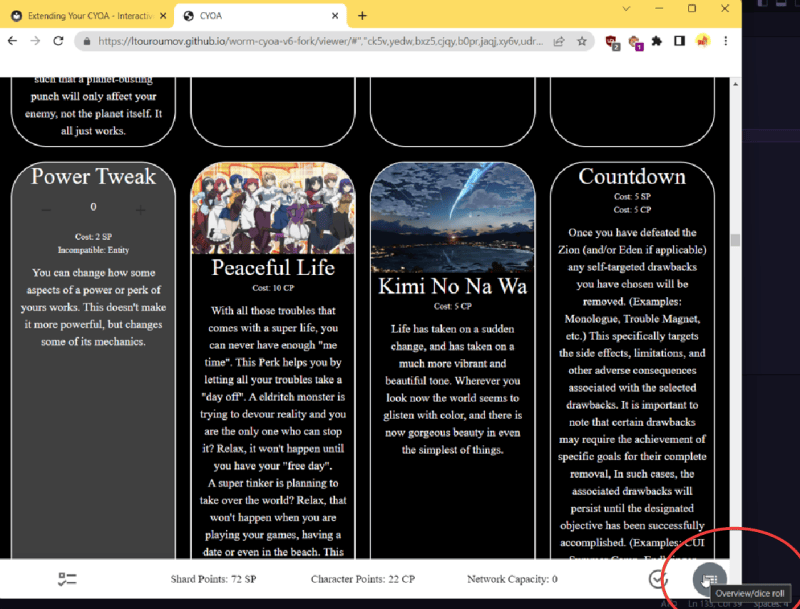
The Complete Overview of Interactive CYOA
Interactive CYOA (Choose Your Own Adventure) represents a fusion of narrative design and user-driven interactivity, where stories unfold based on player decisions rather than linear scripting. Unlike traditional media, which dictates a single path, these systems prioritize agency—allowing participants to influence outcomes through choices, consequences, and emergent storytelling. The term now encompasses a spectrum of applications: from text-based adventures in apps like Choice of Games to VR experiences where physical movement alters the plot. What unites them is a shared philosophy: the story is co-created by the audience.
The shift from static to dynamic narratives began in the late 20th century, but the digital era accelerated its evolution. Modern interactive CYOA platforms leverage databases, procedural generation, and even machine learning to create vast, personalized story worlds. Developers now use tools like Twine, Inkle, or custom engines to build environments where choices trigger cascading effects—some predictable, others wildly unpredictable. This adaptability has made interactive CYOA a versatile tool, applicable in gaming, education, therapy, and even corporate storytelling. The key innovation? Turning passive readers into active architects of their own journeys.
Historical Background and Evolution
The origins of interactive CYOA trace back to 1976, when Edward Packard and R.A. Montgomery published the first Choose Your Own Adventure book. These paperbacks featured numbered sections, allowing readers to jump between pages based on their selections. The concept was revolutionary: for the first time, a story’s outcome depended on the reader’s decisions. By the 1980s, the format migrated to digital platforms, with games like The Oregon Trail and Zork introducing choice-driven gameplay. However, early digital adaptations were limited by technology—text parsers and static branches couldn’t replicate the depth of print.
Table of Contents
- The Complete Overview of Interactive CYOA
- Historical Background and Evolution
- Core Mechanisms: How It Works
- Key Benefits and Crucial Impact
- Major Advantages
- Comparative Analysis
- Future Trends and Innovations
- Conclusion
- Comprehensive FAQs
- Q: What tools are best for creating interactive CYOA experiences?
- Q: How does interactive CYOA differ from traditional video games?
- Q: Can interactive CYOA be used for educational purposes?
- Q: What role does AI play in modern interactive CYOA?
- Q: Are there ethical concerns with interactive CYOA?
- Q: What’s the most successful commercial example of interactive CYOA?
The real breakthrough came in the 2000s with the rise of hypertext fiction and tools like Twine, which democratized interactive CYOA creation. Indie developers could now craft intricate, non-linear stories without coding expertise. Meanwhile, commercial ventures like Choice of Games (formerly FictionVault) proved that choice-driven narratives could thrive as a standalone medium, attracting millions of players worldwide. Today, interactive CYOA systems integrate AI, procedural generation, and even biometric feedback (e.g., heart rate affecting story difficulty) to push boundaries further. The evolution reflects a broader cultural shift: audiences no longer want to be led—they want to lead.
Core Mechanisms: How It Works
At its core, interactive CYOA relies on three pillars: branching narratives, dynamic state management, and user feedback loops. Branching narratives divide the story into nodes (scenes, choices, or events) connected by conditional triggers. When a user selects an option, the system evaluates their choice against predefined rules—e.g., "If the player picks ‘fight,’ skip to Node 4; if ‘run,’ proceed to Node 7." Dynamic state management tracks variables like inventory, relationships, or reputation, ensuring choices have lasting consequences. For example, stealing an item might unlock a new path but also raise the difficulty of future encounters.
User feedback loops refine the experience by adapting to behavior. Some systems use procedural generation to create unique story elements on the fly, while others employ machine learning to analyze player preferences and tailor subsequent choices. Advanced platforms even incorporate real-time data, such as typing speed or pause duration, to adjust pacing or narrative complexity. The result is a self-modifying experience where the story evolves in response to the participant’s engagement. This interplay between structure and spontaneity is what distinguishes interactive CYOA from traditional media—it’s not just a story; it’s a living system.
Key Benefits and Crucial Impact
The rise of interactive CYOA isn’t just a niche trend—it’s a paradigm shift in how stories are consumed and created. For creators, it offers unparalleled flexibility: a single narrative can generate thousands of unique paths without requiring exhaustive scripting. For audiences, it delivers personalization at scale, ensuring no two experiences are identical. This duality has made interactive CYOA a powerful tool across industries, from edtech (where adaptive branching improves learning retention) to marketing (where interactive campaigns boost engagement). The technology also addresses a fundamental human desire: the need to see oneself as the hero of the story.
Yet its impact extends beyond entertainment. In therapy, interactive CYOA systems help patients explore emotional scenarios in a safe, controlled environment. In corporate training, they simulate real-world decisions with measurable outcomes. Even in journalism, non-linear storytelling allows readers to investigate angles at their own pace. The versatility stems from its core strength: it turns passive observation into active participation. As one narrative designer put it, "Interactive CYOA doesn’t just tell you a story—it lets you live it."
"The most compelling stories aren’t those we read, but those we help create. Interactive CYOA is the bridge between author and audience, where every choice is a collaboration."
— Jane McGonigal, Game Designer & Author
Major Advantages
- Personalization at Scale: Algorithms and branching paths ensure each user’s experience is unique, adapting to their preferences without manual intervention.
- Replayability and Discovery: Unlike linear media, interactive CYOA encourages multiple playthroughs, each revealing new outcomes based on different choices.
- Engagement Through Agency: Users invest emotionally in their decisions, increasing retention and satisfaction compared to passive consumption.
- Cost-Effective Content Creation: Tools like Twine or Ink allow creators to build complex narratives with minimal resources, reducing development overhead.
- Cross-Industry Applicability: From education to healthcare, interactive CYOA adapts to diverse needs, whether teaching history or simulating crisis management.

Comparative Analysis
The table below contrasts interactive CYOA with traditional storytelling formats, highlighting key differentiators:
| Feature | Interactive CYOA | Traditional Storytelling |
|---|---|---|
| User Agency | High (choices directly impact outcomes) | Low (fixed narrative path) |
| Content Scalability | Dynamic (procedural generation, AI adaptation) | Static (requires manual updates for changes) |
| Engagement Depth | Active (participants co-create the story) | Passive (audience consumes pre-defined content) |
| Development Complexity | Moderate (requires branching logic, but tools simplify creation) | High (scripting, casting, and production costs) |
Future Trends and Innovations
The next frontier for interactive CYOA lies in the convergence of emerging technologies. Virtual reality (VR) and augmented reality (AR) are poised to deepen immersion, allowing users to physically navigate story worlds where choices trigger environmental changes—e.g., burning a forest alters the landscape for subsequent players. Meanwhile, advancements in natural language processing (NLP) could enable fully conversational interactive CYOA systems, where players type or speak their decisions in real time, with the AI responding dynamically. Another trend is collaborative storytelling, where multiple users contribute to a shared narrative, creating a communal experience akin to a digital choose-your-own-adventure game.
On the technical side, interactive CYOA platforms will likely integrate more sophisticated data analytics, using player behavior to predict trends and refine storytelling algorithms. For instance, a system might detect that 80% of users choose "diplomacy" over "violence" in a conflict scenario and adjust future branching paths accordingly. Additionally, the rise of blockchain-based narratives could introduce permanent, verifiable story states, allowing users to own and trade their unique story outcomes as digital assets. As these innovations unfold, interactive CYOA will cease to be a genre and instead become a fundamental framework for human-computer interaction.

Conclusion
Interactive CYOA is more than a storytelling technique—it’s a reflection of how modern audiences engage with media. In an era of algorithmic curation and personalized content, the demand for agency has never been higher. What makes interactive CYOA enduring is its ability to balance creativity and control, offering both structure and freedom. For creators, it’s a playground of infinite possibilities; for users, it’s a mirror of their own decision-making. As the technology matures, its applications will only expand, from hyper-personalized education to immersive therapy. The future of interactive CYOA isn’t just about choosing your own adventure—it’s about co-authoring it.
Yet the most compelling aspect remains its simplicity: at its heart, interactive CYOA is about the same question that’s driven storytelling for centuries—"What if?"—now answered in real time, by real people, in real stories. The tools may evolve, but the core remains unchanged: the thrill of turning the page, clicking the button, and wondering what happens next.
Comprehensive FAQs
Q: What tools are best for creating interactive CYOA experiences?
A: Popular tools include Twine (free, open-source, and ideal for beginners), Inkle (used in commercial projects like 80 Days), and Ren'Py (for visual novels with branching paths). For more advanced needs, custom engines built with Unity or Unreal Engine offer full control over mechanics and environments.
Q: How does interactive CYOA differ from traditional video games?
A: While both involve user choices, interactive CYOA prioritizes narrative-driven decisions over gameplay mechanics. Games like The Witcher 3 include choices, but their primary focus is combat, exploration, or puzzles. In contrast, interactive CYOA systems (e.g., Choice of Games) treat storytelling as the sole gameplay loop, with minimal distractions.
Q: Can interactive CYOA be used for educational purposes?
A: Absolutely. Platforms like Branch Track and Twine are used to create adaptive learning modules where students navigate historical events, solve math problems through choices, or practice language skills in interactive scenarios. Studies show that branching narratives improve retention by 20–30% compared to linear lessons.
Q: What role does AI play in modern interactive CYOA?
A: AI enhances interactive CYOA through dynamic content generation, natural language processing (for conversational choices), and player behavior analysis. For example, AI can generate new story branches on the fly, adjust difficulty based on user performance, or even create unique dialogue responses tailored to a player’s past decisions.
Q: Are there ethical concerns with interactive CYOA?
A: Yes. Issues include manipulative design (e.g., nudging users toward specific outcomes for marketing), addictive loops (endless replayability can encourage compulsive behavior), and data privacy (tracking player choices for analytics). Developers must balance engagement with transparency, ensuring users understand how their decisions are recorded and used.
Q: What’s the most successful commercial example of interactive CYOA?
A: Choice of Games (formerly FictionVault) is the most prominent, with over 100 million downloads across its library of romance, horror, and sci-fi titles. Other notable examples include Episode Interactive’s The Walking Dead series (a mix of CYOA and visual novel elements) and Bandersnatch (Netflix’s interactive film, which proved the format’s mainstream appeal).
Leave a Comment
Comments are moderated before appearing. The data you submit is processed according to the Privacy Policy of Filmfestivalcircuit.