How to Accurately Determine Subcooling in HVAC Systems
Subcooling isn’t just a technical term—it’s the silent performance multiplier in refrigeration systems, where even fractional degrees can dictate energy efficiency, equipment longevity, and operational costs. The ability to determine subcooling with precision separates competent HVAC technicians from those who optimize systems at the molecular level. Yet, despite its critical role, many professionals still rely on outdated methods or misinterpret readings, leading to wasted energy and premature system failures.
The science behind determining subcooling lies in the intersection of thermodynamics and fluid dynamics, where liquid refrigerant’s temperature drops below its saturation point before entering the expansion valve. This seemingly minor detail creates a ripple effect: improved heat transfer, reduced compressor workload, and minimized flash gas formation. Without accurate subcooling measurement, systems operate in a thermodynamic gray zone—neither optimal nor catastrophic, but inefficient nonetheless.
Modern refrigeration systems demand more than basic troubleshooting. They require a systematic approach to assessing subcooling levels, accounting for variables like refrigerant type, ambient conditions, and system design. The margin between proper subcooling and underperformance is often measured in tenths of a degree, making calibration and diagnostic tools essential for any professional in the field.
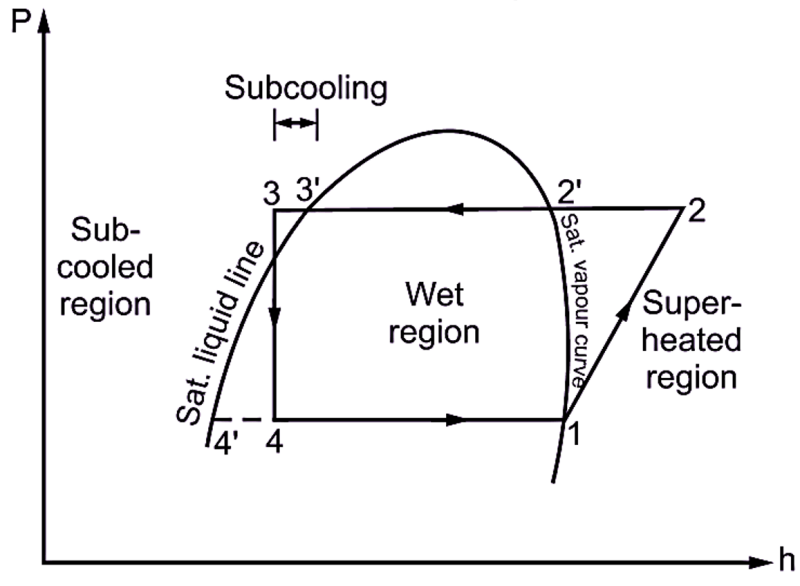
The Complete Overview of Subcooling Measurement
Subcooling measurement is the process of quantifying how far a refrigerant’s liquid temperature falls below its saturation temperature at a given pressure. This metric is fundamental in evaluating the health of a refrigeration cycle, as it directly influences system efficiency, cooling capacity, and component stress. When determining subcooling, technicians must consider both static conditions (pressure-temperature relationships) and dynamic factors (flow rates, heat exchanger performance).The core principle revolves around the refrigerant’s phase diagram: at a specific pressure, a liquid refrigerant should theoretically boil at its saturation temperature. However, in a well-designed system, the liquid is deliberately cooled further—this excess cooling is subcooling. The difference between the actual liquid temperature and the saturation temperature (derived from the corresponding pressure) yields the subcooling value, typically expressed in degrees Fahrenheit or Celsius. For example, if a system’s refrigerant is at 40°F (4.4°C) while its saturation temperature at that pressure is 45°F (7.2°C), the subcooling is 5°F (2.8°C).
Historical Background and Evolution
The concept of subcooling emerged alongside early refrigeration theory in the 19th century, as engineers sought to improve the efficiency of vapor-compression cycles. Pioneers like James Harrison and Carl von Linde recognized that superheating (for vapor) and subcooling (for liquid) were critical to minimizing energy losses during phase changes. However, practical measurement techniques lagged behind theoretical understanding until the mid-20th century, when electronic pressure gauges and thermocouples became standard tools.The evolution of determining subcooling accelerated with the advent of digital manometers and refrigerant-specific software, which allowed for real-time calculations and trend analysis. Today, advanced systems integrate subcooling data with other metrics (e.g., superheat, compressor discharge temperature) to provide a holistic view of cycle performance. Historical limitations—such as reliance on static charts or manual calculations—have been replaced by automated sensors and AI-driven diagnostics, though the fundamental physics remain unchanged.
Core Mechanisms: How It Works
Subcooling occurs in the liquid line between the condenser and the expansion valve, where the refrigerant absorbs residual heat before entering the evaporator. The process hinges on three key variables: condenser performance, refrigerant flow stability, and ambient conditions. A properly functioning condenser will reject heat efficiently, lowering the refrigerant’s temperature below its saturation point. Conversely, poor condenser performance (due to fouling, restricted airflow, or inadequate refrigerant charge) reduces subcooling, leading to inefficiency.Table of Contents
- The Complete Overview of Subcooling Measurement
- Historical Background and Evolution
- Core Mechanisms: How It Works
- Key Benefits and Crucial Impact
- Major Advantages
- Comparative Analysis
- Future Trends and Innovations
- Conclusion
- Comprehensive FAQs
- Q: Why is subcooling important in refrigeration cycles?
- Q: How do I measure subcooling in the field?
- Q: What causes low subcooling in an HVAC system?
- Q: Can subcooling be too high?
- Q: How does refrigerant type affect subcooling targets?
- Q: What tools are essential for accurate subcooling measurement?
- Q: How often should subcooling be checked during maintenance?
To determine subcooling accurately, technicians must measure the refrigerant’s liquid temperature at the condenser outlet and compare it to the saturation temperature corresponding to the liquid line pressure. This requires precise instrumentation: a digital thermometer for temperature and a refrigerant-specific pressure gauge for accurate pressure readings. The calculation is straightforward—subtract the saturation temperature (from pressure) from the measured liquid temperature—but the challenge lies in ensuring the system is in steady-state and accounting for pressure drops in the liquid line.
Key Benefits and Crucial Impact
Subcooling is more than a diagnostic tool; it’s a performance multiplier that directly impacts a system’s economic and environmental footprint. Proper subcooling reduces compressor work by minimizing flash gas (vapor formed during expansion), which otherwise lowers cooling capacity and increases energy consumption. Additionally, controlled subcooling extends the lifespan of components by reducing thermal stress on the expansion valve and evaporator.The ripple effects of optimizing subcooling extend beyond the mechanical: lower energy bills, reduced refrigerant emissions, and compliance with increasingly stringent efficiency regulations. For commercial and industrial facilities, even marginal improvements in subcooling can translate to thousands of dollars in annual savings. Yet, the benefits are often overlooked because determining subcooling requires specialized knowledge and equipment, not just theoretical understanding.
"Subcooling is the silent efficiency killer—or savior—of refrigeration systems. A well-tuned system with optimal subcooling can achieve 10–20% better efficiency than one operating with suboptimal levels, making it one of the most cost-effective upgrades in HVAC." — HVAC Engineering Journal, 2023
Major Advantages
- Energy Efficiency: Every degree of subcooling reduces compressor workload by approximately 1–2%, directly lowering electricity consumption.
- Prevents Flash Gas: Adequate subcooling ensures the refrigerant enters the evaporator as a liquid, maximizing heat absorption and system capacity.
- Component Protection: Reduced thermal cycling on the expansion valve and evaporator minimizes wear, extending equipment life.
- Refrigerant Charge Optimization: Proper subcooling helps identify overcharged or undercharged systems, preventing damage and improving performance.
- Regulatory Compliance: Many efficiency standards (e.g., ASHRAE 90.1) indirectly reference subcooling as a key performance metric for HVAC systems.

Comparative Analysis
| Parameter | Optimal Subcooling Range |
|---|---|
| Residential Split Systems (R-410A) | 8–12°F (4–7°C) |
| Commercial Chillers (R-134a) | 10–15°F (5–8°C) |
| Industrial Refrigeration (Ammonia) | 5–10°F (3–6°C) |
| Low-Temperature Applications (R-290) | 3–7°F (1–4°C) |
Future Trends and Innovations
The future of subcooling measurement lies in predictive analytics and IoT integration. Emerging technologies, such as machine learning algorithms, can analyze subcooling trends over time to predict component failures before they occur. Smart sensors embedded in refrigerant lines will provide real-time subcooling data, enabling remote monitoring and automated adjustments. Additionally, advancements in eco-friendly refrigerants (e.g., R-32, R-290) will require recalibration of subcooling targets, as their thermodynamic properties differ from traditional refrigerants.Another trend is the integration of subcooling data with digital twins—virtual replicas of HVAC systems that simulate performance under various conditions. This allows engineers to test subcooling optimization strategies without physical intervention, reducing trial-and-error in system tuning. As sustainability becomes a priority, determining subcooling will also play a role in carbon footprint tracking, with systems optimized for minimal energy use aligning with global decarbonization goals.

Conclusion
Subcooling is a deceptively simple yet profoundly impactful metric in refrigeration engineering. The ability to determine subcooling accurately is not just about reading a gauge—it’s about understanding the entire refrigeration cycle and its dependencies. Whether troubleshooting an underperforming system or fine-tuning a new installation, subcooling data provides the insights needed to balance efficiency, reliability, and cost.For professionals in the field, mastering subcooling measurement is a gateway to higher performance standards. As systems grow more complex and regulations tighten, the margin for error shrinks. Those who invest in precise subcooling analysis will not only optimize their operations but also future-proof their systems against evolving challenges.
Comprehensive FAQs
Q: Why is subcooling important in refrigeration cycles?
A: Subcooling ensures that refrigerant enters the evaporator as a liquid, preventing flash gas formation, which reduces cooling capacity and increases compressor workload. Proper subcooling also minimizes thermal stress on components, extending system lifespan.
Q: How do I measure subcooling in the field?
A: To determine subcooling, measure the refrigerant’s liquid temperature at the condenser outlet using a thermometer, then record the liquid line pressure with a refrigerant-specific gauge. Subtract the saturation temperature (from pressure) from the measured temperature. For example, if the liquid temp is 40°F and the saturation temp is 45°F at that pressure, subcooling is 5°F.
Q: What causes low subcooling in an HVAC system?
A: Low subcooling is typically caused by insufficient condenser capacity (due to fouling, restricted airflow, or ambient temperature), an overcharged or undercharged refrigerant system, or a malfunctioning condenser fan. It can also result from high ambient temperatures or refrigerant migration in off-cycle systems.
Q: Can subcooling be too high?
A: Yes, excessive subcooling (beyond manufacturer recommendations) can indicate an overcharged system, which may lead to liquid slugging in the compressor or reduced heat transfer in the evaporator. It can also increase energy consumption if the condenser is overworked to achieve excessive cooling.
Q: How does refrigerant type affect subcooling targets?
A: Different refrigerants have unique thermodynamic properties, so subcooling targets vary. For instance, R-410A typically requires 8–12°F of subcooling, while ammonia systems may operate optimally at 5–10°F. Always consult the refrigerant’s pressure-enthalpy chart or manufacturer guidelines when determining subcooling for a specific application.
Q: What tools are essential for accurate subcooling measurement?
A: Essential tools include a digital manometer (for precise pressure readings), a refrigerant-specific temperature probe (e.g., thermocouple or RTD), and a refrigerant identification kit to confirm the correct pressure-temperature relationships. Some advanced systems use portable refrigerant analyzers that combine these functions.
Q: How often should subcooling be checked during maintenance?
A: Subcooling should be checked during routine maintenance intervals, typically every 6–12 months for commercial systems and annually for residential units. Additionally, it should be monitored whenever performance issues arise, such as reduced cooling capacity, high energy bills, or unusual compressor behavior.
Leave a Comment
Comments are moderated before appearing. The data you submit is processed according to the Privacy Policy of Filmfestivalcircuit.