How to decode midside audio: The science behind stereo separation
The human ear perceives sound in three dimensions, yet most recordings flatten that experience into two channels—left and right. This limitation forces engineers to employ clever tricks, one of the most elegant being decode midside audio (MS decoding). By splitting a stereo signal into mid (mono) and side (difference) components, MS encoding unlocks precision control over spatial audio, panning, and even noise reduction. Without this technique, modern surround sound, live broadcasts, and high-fidelity audio would lack the depth and clarity we now take for granted.
At its core, decoding midside audio is a mathematical operation that reverses the MS encoding process, reconstructing the original left and right channels from their summed and difference components. This isn’t just academic—it’s the backbone of professional audio workflows, from mixing consoles to digital signal processors (DSP). The ability to manipulate mid and side signals independently allows engineers to isolate vocal tracks, suppress background noise, or expand stereo fields into immersive formats like 5.1 or Dolby Atmos.
Yet despite its ubiquity, the principles behind decode midside audio remain misunderstood by many practitioners. The confusion often stems from treating MS encoding as a black box rather than a tool with deliberate trade-offs. Whether you’re restoring vintage recordings, designing a new audio interface, or troubleshooting a mixing console, grasping how MS decoding interacts with phase, frequency response, and dynamic range is essential. This guide cuts through the theory to reveal how it functions in practice—and why it’s still the gold standard for stereo audio manipulation.
The Complete Overview of Decoding Midside Audio
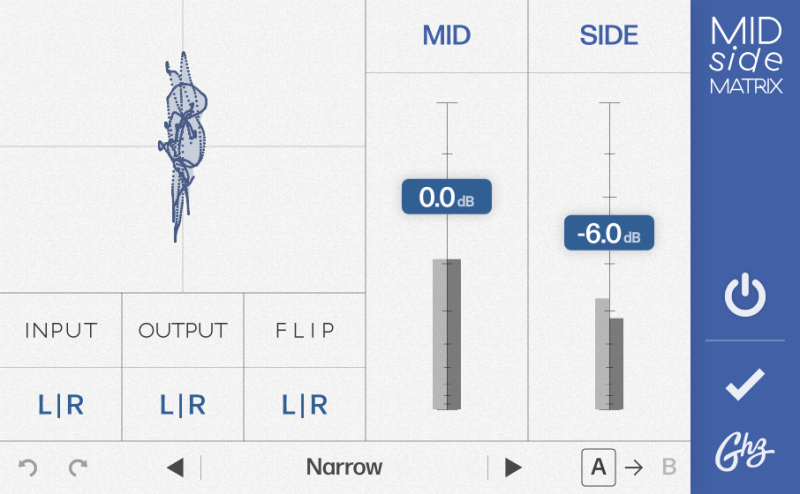
Decode midside audio is the process of converting a summed (mid) and difference (side) signal back into left and right channels, a technique central to stereo audio processing. The mid component represents the mono content shared by both channels, while the side component captures the differences that create width and depth. When decoded correctly, this separation allows for granular adjustments—such as widening a mix without altering the mono compatibility or isolating specific elements in a stereo field.The practical applications of decoding midside audio span from live sound reinforcement to post-production mastering. In live environments, MS encoding is used to transmit a single stereo signal over two channels (e.g., via XLR cables), reducing cabling complexity. During mixing, MS decoding enables techniques like "mid/side EQ," where the mono (mid) and stereo (side) elements are treated independently. For example, boosting high frequencies in the side channel can enhance stereo imaging without affecting the mono sum—a critical consideration for broadcast and film audio, where phase coherence matters.
Historical Background and Evolution
The origins of decode midside audio trace back to the early 20th century, when engineers sought ways to transmit stereo signals over limited bandwidth or single-channel media. In 1931, Alan Blumlein patented the MS encoding method as part of his work on stereophonic sound for British film studios. Blumlein’s system used a matrix to combine two microphones—one capturing the mono sum (mid) and the other the difference (side)—to create a stereo image. This approach was later adopted by broadcast and recording industries, becoming the foundation for modern stereo techniques.By the 1950s, decoding midside audio became standard in professional audio equipment, particularly in mixing consoles and tape machines. The rise of multitrack recording in the 1960s further cemented its importance, as engineers used MS decoding to isolate instruments in a stereo field. Today, the technique is embedded in digital audio workstations (DAWs), hardware processors, and even consumer-grade audio interfaces, though its underlying principles remain unchanged since Blumlein’s innovations.
Core Mechanisms: How It Works
The mathematics behind decode midside audio is straightforward but powerful. Given a mid (M) and side (S) signal, the left (L) and right (R) channels are reconstructed using these formulas:Table of Contents
- The Complete Overview of Decoding Midside Audio
- Historical Background and Evolution
- Core Mechanisms: How It Works
- Key Benefits and Crucial Impact
- Major Advantages
- Comparative Analysis
- Future Trends and Innovations
- Conclusion
- Comprehensive FAQs
- Q: Can I decode midside audio in real-time for live performances?
- Q: Does decoding midside audio affect the phase of my signal?
- Q: Why does the side channel sound quieter than the mid channel after decoding?
- Q: Can I use decode midside audio to isolate a vocal from a stereo mix?
- Q: What’s the difference between MS encoding and LR (left/right) encoding?
- Q: Are there any limitations to using decode midside audio in mastering?
This matrix operation effectively "unfolds" the stereo image. The mid component (M) is the sum of the original left and right signals, while the side component (S) is their difference. When decoded, the side signal is added to the mid for the left channel and subtracted for the right, restoring the original panning. Crucially, this process preserves phase relationships, ensuring that the decoded signal retains its original timing and coherence.
However, decoding midside audio introduces a critical consideration: the side channel’s amplitude is typically half that of the mid channel. This is because the difference signal (S) is derived from subtracting two equal-amplitude signals (L and R), which inherently reduces its level by 6 dB. Engineers must account for this in gain staging to avoid clipping or noise floor issues. Modern DSP tools often include automatic gain adjustment to mitigate this, but understanding the underlying dynamics remains vital for precise control.
Key Benefits and Crucial Impact
The ability to decode midside audio transforms how audio professionals manipulate spatial sound. By isolating mid and side components, engineers can apply effects, EQ, or compression to specific elements without affecting the entire mix. This precision is particularly valuable in mastering, where maintaining mono compatibility (for radio broadcast) while enhancing stereo width is essential. Additionally, MS decoding enables noise reduction techniques, such as isolating a vocal track from a stereo background by attenuating the side channel’s low-end rumble.Beyond technical advantages, decoding midside audio has cultural significance. It underpins the immersive soundscapes of modern films, video games, and virtual reality experiences. Without MS encoding/decoding, techniques like "binaural-to-binaural" conversion or object-based audio (e.g., Dolby Atmos) would lack the spatial accuracy required for convincing realism. The method’s efficiency also extends to live sound, where a single MS-encoded signal can be distributed to multiple speakers or processed through effects chains without phase cancellation.
"MS encoding is the Swiss Army knife of stereo audio—simple in theory, but endlessly versatile in practice. It’s the difference between a flat, two-dimensional mix and one that breathes with depth and intention." — George Massenburg, Legendary Audio Engineer
Major Advantages
- Stereo Imaging Control: Adjust the side channel to widen or narrow the stereo field without altering the mono sum, preserving compatibility for mono playback.
- Noise and Interference Reduction: Isolate and suppress unwanted frequencies (e.g., rumble or hiss) by targeting the side channel, which often contains less critical low-end content.
- Efficient Signal Transmission: Encode stereo as mid/side to transmit over two channels (e.g., via XLR cables), reducing cabling complexity in live sound setups.
- Phase-Coherent Processing: Apply effects or EQ to mid and side components independently, ensuring phase alignment in the decoded output.
- Compatibility with Advanced Formats: Serve as a bridge between traditional stereo and immersive audio formats like Dolby Atmos or Auro-3D by enabling flexible channel mapping.

Comparative Analysis
| Aspect | Decode Midside Audio (MS) | Traditional Stereo (LR) |
|---|---|---|
| Spatial Control | Precise mid/side separation allows independent adjustments to mono and stereo elements. | Panning is tied to left/right channels; changes affect both mono and stereo width. |
| Phase Handling | Phase relationships are preserved during encoding/decoding, reducing cancellation. | Phase issues can arise when panning elements, especially at low frequencies. |
| Signal Transmission | Efficient for live sound (e.g., XLR over two cables) and digital routing. | Requires dedicated left/right channels, increasing cabling or bandwidth needs. |
| Compatibility | Mono-compatible by design; ideal for broadcast and mastering. | Mono compatibility depends on panning; imbalanced mixes may suffer in mono. |
Future Trends and Innovations
As audio technology evolves, decode midside audio is adapting to new formats and workflows. The rise of object-based audio (e.g., Dolby Atmos) has expanded the role of MS decoding, as engineers use mid/side matrices to translate stereo elements into multi-channel immersive soundscapes. Machine learning is also entering the picture, with AI-driven tools automating MS encoding/decoding for dynamic spatial audio—adjusting in real-time based on listener position or content type.Another frontier is the integration of decode midside audio with spatial audio rendering (SAR) for virtual reality and streaming platforms. By decoding mid/side signals into higher-order ambisonics or first-order formats, creators can achieve seamless transitions between stereo and immersive playback. Meanwhile, hardware manufacturers are embedding MS decoding into affordable audio interfaces, democratizing access to professional-grade stereo manipulation. The future of decoding midside audio lies in its ability to bridge legacy techniques with next-generation spatial audio—proving that Blumlein’s 1931 innovation remains as relevant as ever.

Conclusion
Decoding midside audio is more than a technical process; it’s a cornerstone of modern audio engineering. From its roots in analog broadcasting to its current role in digital mastering and immersive sound, MS decoding offers unparalleled control over stereo imaging, noise reduction, and signal transmission. Its efficiency and versatility ensure its continued dominance in professional workflows, even as new formats emerge.For practitioners, mastering decode midside audio means unlocking a new dimension of creative and technical possibilities. Whether you’re mixing a film score, designing a live sound system, or restoring vintage recordings, understanding how mid and side signals interact will elevate your work. The principles remain timeless—what changes is how we apply them.
Comprehensive FAQs
Q: Can I decode midside audio in real-time for live performances?
A: Yes, many modern audio interfaces and mixing consoles include hardware or software MS decoding for real-time processing. For example, interfaces like the Apogee Symphony or RME Fireface offer MS encoding/decoding via their control panels. In DAWs, plugins like iZotope Ozone or Waves NS1 can handle real-time MS decoding for live adjustments.
Q: Does decoding midside audio affect the phase of my signal?
A: When done correctly, decoding midside audio preserves phase relationships because the mid and side components are mathematically inverted to reconstruct the original left and right channels. However, if the side channel is delayed or processed asymmetrically (e.g., with different EQ on each side), phase issues can arise. Always monitor the decoded signal in mono to verify coherence.
Q: Why does the side channel sound quieter than the mid channel after decoding?
A: The side channel’s amplitude is inherently 6 dB lower than the mid channel because it’s derived from the difference between two equal-level signals (L – R). This is a fundamental aspect of MS encoding. To compensate, many DSP tools include a 6 dB gain boost for the side channel during decoding, restoring balance to the left and right outputs.
Q: Can I use decode midside audio to isolate a vocal from a stereo mix?
A: While not a perfect solution, decoding midside audio can help isolate vocals if they were recorded with a mid/side approach (e.g., a center microphone for vocals and side microphones for instruments). By attenuating the side channel, you can reduce the width of the mix, often bringing the vocal forward. However, for precise vocal extraction, techniques like spectral editing or phase correlation are more effective.
Q: What’s the difference between MS encoding and LR (left/right) encoding?
A: MS encoding represents stereo as a mono sum (mid) and a difference (side), which is efficient for transmission and processing. LR encoding, by contrast, treats left and right as independent channels. MS is preferred for stereo manipulation because it decouples mono and stereo elements, allowing independent adjustments. LR encoding lacks this flexibility and can introduce phase issues when panned elements are processed.
Q: Are there any limitations to using decode midside audio in mastering?
A: One key limitation is that decoding midside audio assumes the original signal was encoded in MS format. If a stereo mix was created with traditional LR panning, MS decoding may not yield the expected results—especially if the original panning was asymmetrical. Additionally, aggressive side-channel processing (e.g., heavy EQ or compression) can degrade stereo imaging or introduce artifacts. Always A/B test decoded mixes to ensure transparency.
Leave a Comment
Comments are moderated before appearing. The data you submit is processed according to the Privacy Policy of Filmfestivalcircuit.